The old beekeeping calendar is breaking
And my records are not the only ones showing it

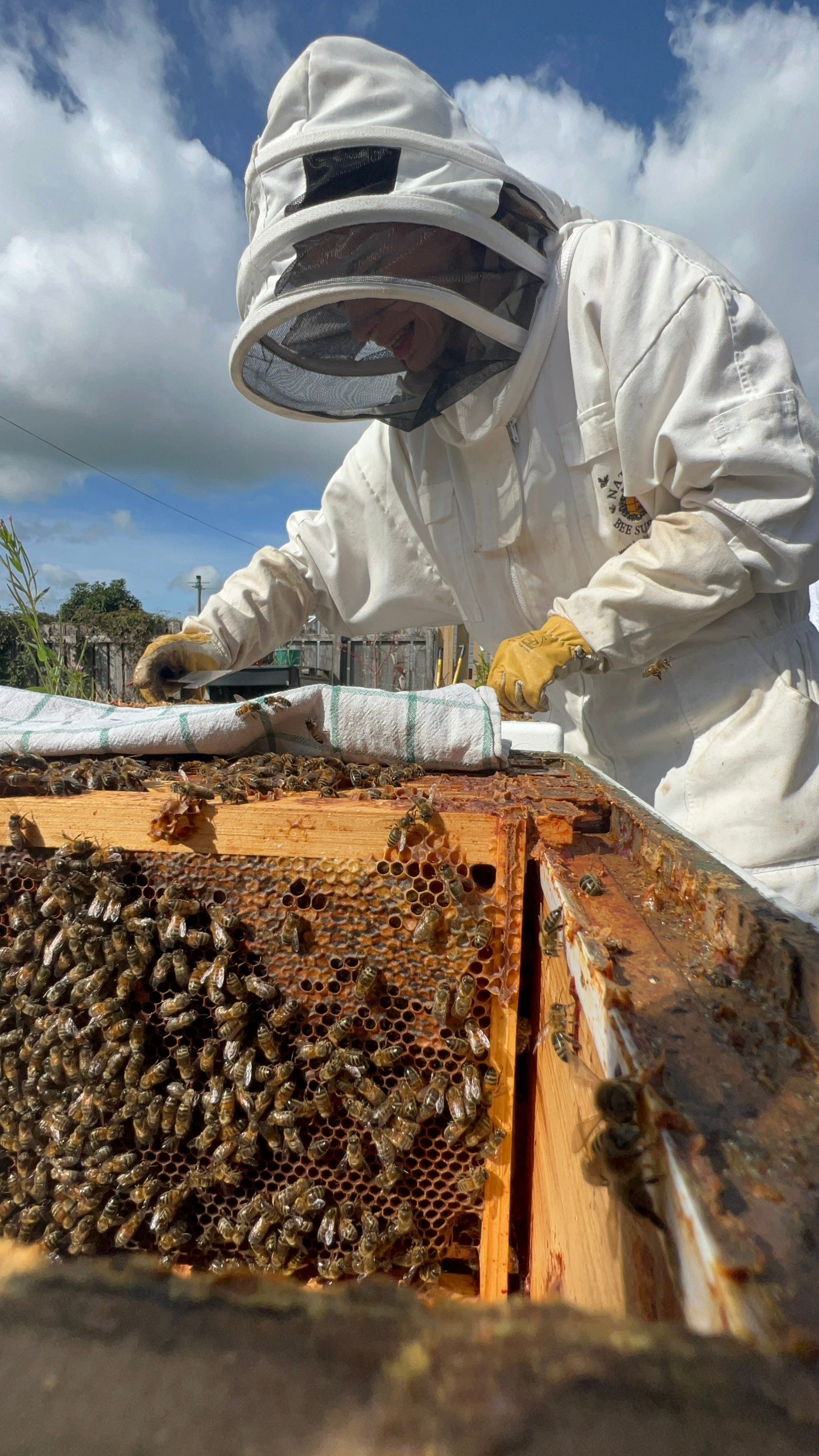
I keep a notebook about my bees.
Nothing sophisticated, just dates. When the first willow opens. When swarm season begins. When it ends. When the main nectar flow starts to fade. Year after year.
Most years the entries don't tell you much on their own. It's only over years that a pattern starts to show: things drifting earlier, then later, then unevenly, in a way that makes the old "rule of thumb" dates I learned from other beekeepers less and less reliable.
This year something stood out in a way I can’t ignore.
The previous years, swarm season has been intense. Predictable in its intensity, even if never identical. I always expect it and I always celebrate it.
If you don’t know what swarming is, I explain it in this video:
Last year swarm season finished by the Summer Solstice.
This year it hasn’t even started yet and the solstice is in a few days.
When small data meets large data
I went into a screening of The People’s Emergency Briefing.
The film is built from a real briefing given last November to more than 1,200 MPs, peers and public figures in Westminster, presented by Chris Packham, covering what climate and nature breakdown means for food systems, health, national security and the economy.
Fifty minutes, calm, evidence-led, not trying to frighten anyone. (Which somehow made it more unsettling than something openly alarmist would have been.) My own small notebook of bee dates is a rounding error next to the dataset these people work with. But it's the same underlying shift. I would just never seen it laid out at that scale before.
One of the most striking moments was a diagram showing atmospheric CO2 over the last 2000 years. It stayed relatively stable through most of human agricultural history. Stable enough that agriculture could develop around it.
Then in the last century, the line shoots upward sharply.
They also showed how depleted UK wildlife is and how much harder it is now for the remaining species to survive in fragmented, stressed ecosystems.
What it feels like in the room
What hit me most in the room was not just the data, but the contrast. The briefing was delivered calmly, by people who clearly understand the system in depth and are not speaking in speculation. It was urgent, but not sensational.
And still, it has already been shown to people in positions of power. In person. At scale. And yet, nothing changed. Business as usual.
That part makes me angry.
I am a millenial who grown up with eco grief. I remember watching documentaries as a child about these issues. I remember how scared I felt.
And watching the screening these feelings returned but in a more intense way.
Hearing ex military generals, climate scientists, economists, and emergency doctors all ringing the alarm bells. Saying we are unprepared for what is coming.
Who was in the room
There were about fifty of us in the room. My husband and I were among the youngest and I haven’t quite stopped thinking about that because we are pushing late 30s.
The screening was about everyone’s food, everyone’s weather, everyone’s risk and somehow it was just too empty.
I think it is because almost nobody has actually been offered this information in a form that reaches them. Not in the way Westminster has been offered anyway.
The entire ask behind this campaign is just that: a proper, public, televised briefing, the same evidence already shared with policymakers. Delivered the way the country was briefed daily during the pandemic.
What happens next
After the screening, I knew I would be sharing all of this with my own community of nature lovers.
With my husband we also spoke about organising a screening in our village through the community council.
If you are in the UK, this is what you can do:
Find out whether your MP, MSP, MS or MLA has backed the call for a televised briefing, and email them. There is a tool that does the lookup for you at nebriefing.org/take-action.
Sign the petition at petition.parliament.uk/petitions/767687 It is at a bit over 22,000 of the 100,000 needed to force a debate.
Host a screening, or find one near you, at nebriefing.org/host-the-film and nebriefing.org/screening-map. You genuinely don’t need more than a room and a willingness to ask people to show up.
If you are outside the UK, you are not excluded from this conversation.
I have already seen screenings taking place in Peru. There is no reason you could not organise one in your own village, town, workplace, or community.
It does not need to be a large event. A handful of people in a room is enough.
We all want clean water. We all want food on the table. We all want a liveable planet for the next generation.
Watch the briefing. Share it with your friends. Share it with your family. The more people who see the evidence, the harder it becomes to ignore.
Click the link to host a screening:
https://www.nebriefing.org/host-the-film
I will keep writing down my dates either way. But I would rather not be the only one paying attention to what they add up to.
If you enjoy thoughtful writing about bees, ecology and the changes happening around us, you can subscribe below. I write regularly about observational beekeeping, science and the wider environmental stories that my bees keep leading me back to.
Eco-grief. It’s a thing. Denial is the preferred defense. Eventually many will be crying “Why didn’t someone DO something about this?”
Thanks for your good writing and advocacy, B&B! (From BB 😉)
I have 50 years of records here and the effect of climate change on this farm is indisputable and increased exponentially over the last ten years.