What Actually Happens Inside a Plant During a Heatwave
The science behind why flowers can bloom while nectar becomes scarce

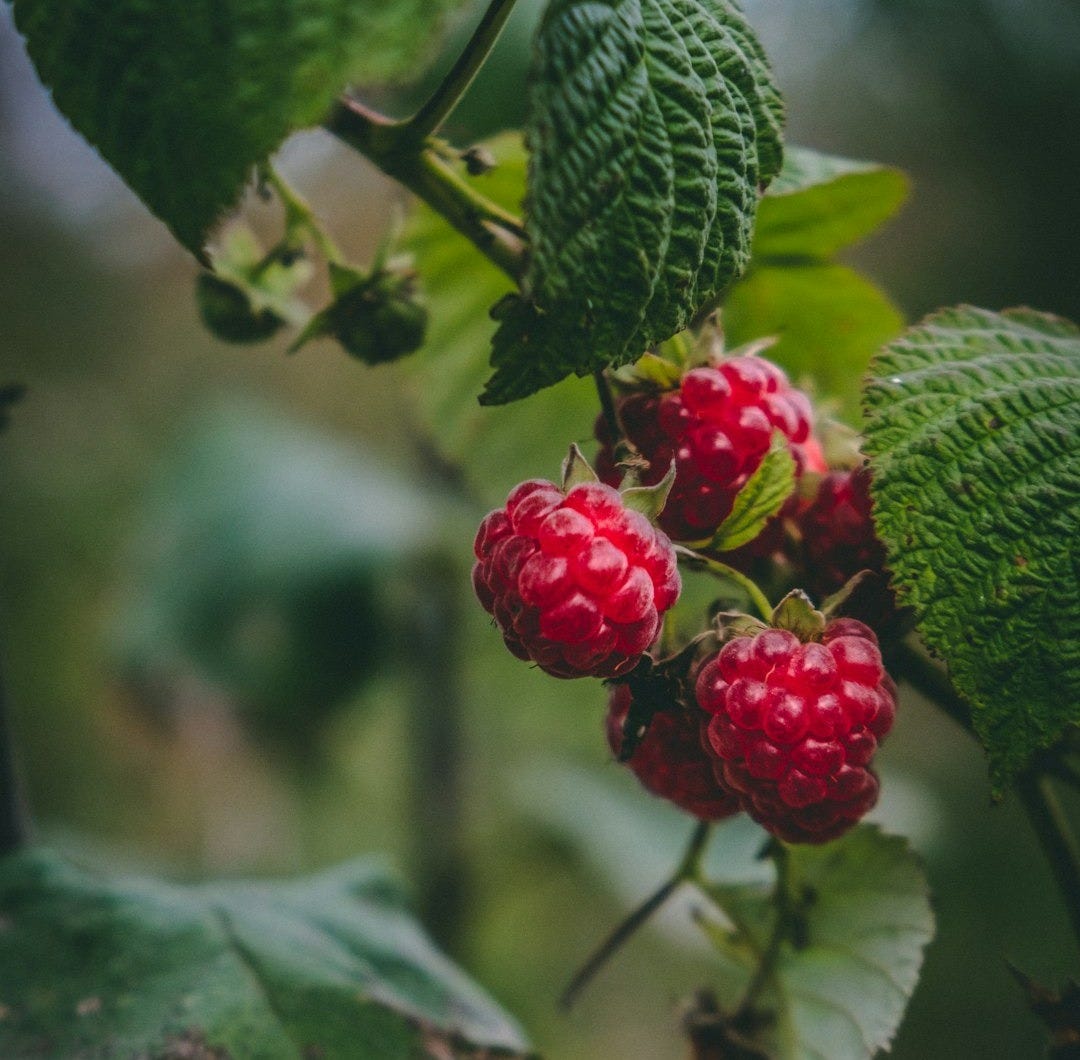
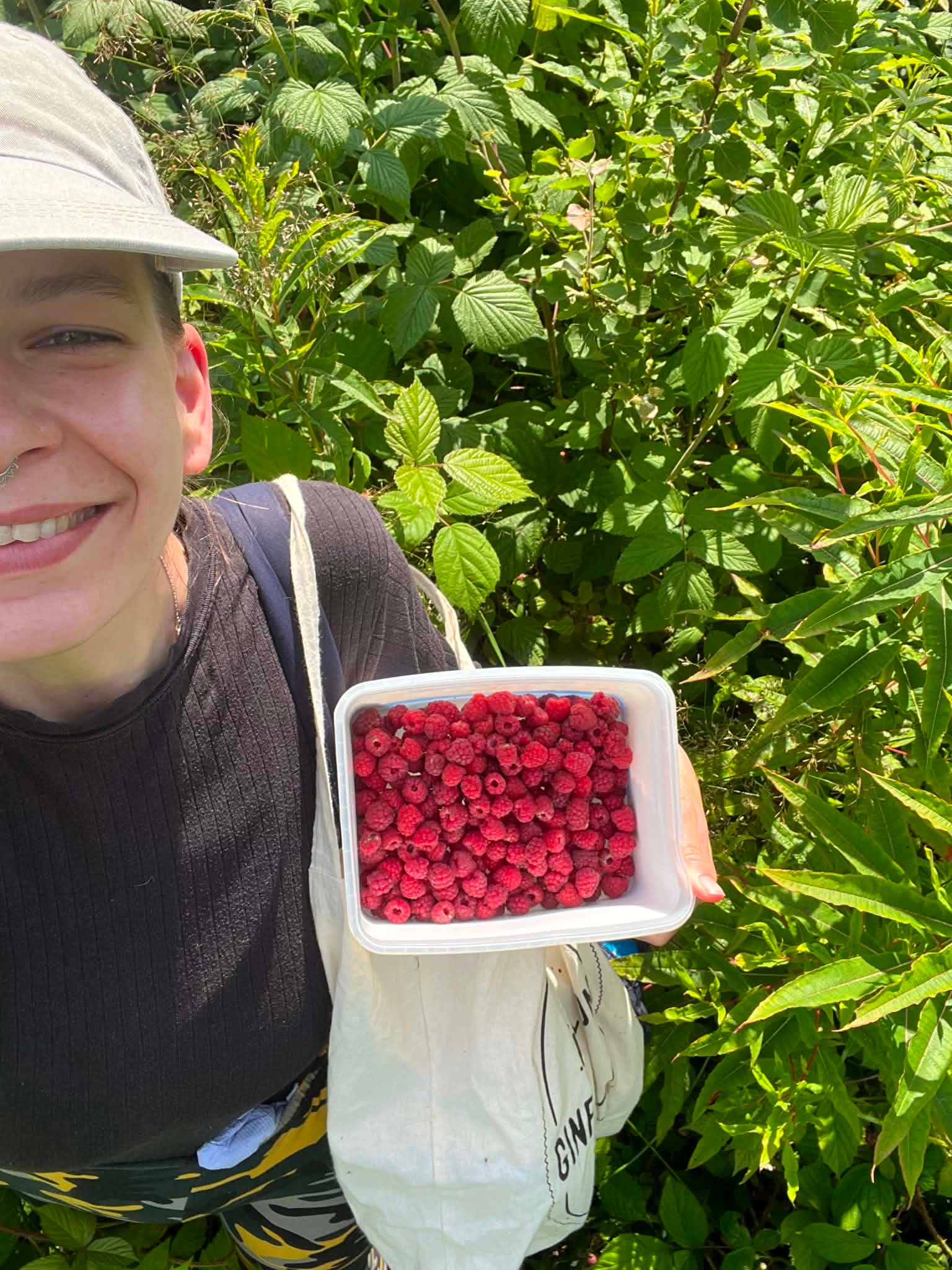
I harvested the first wild raspberries this week. They are glorious. Big, beautiful and abundant, covering the plants with the kind of display that makes you think nature is having an excellent year. But when I tasted the first handful, something was different. They were not as juicy as usual. The sweetness was there. The flavour was there. But the water content was missing.
And that made perfect sense once I looked around. We have had more than two weeks without rain (which is pretty crazy in Scotland). The ground is dry underfoot. The bog behind our garden (normally soft enough to swallow a boot) is beginning to crack and pull back at the edges.
The plants are still flowering. Fireweed, bramble, meadowsweet are all putting on a show. But flowering and offering nectar are not the same thing. And this is where it gets properly interesting.
Because inside every flower is a tiny negotiation between water, sugar and survival.
Subscribe for grounded bee science, observational beekeeping and the ecology most people never get taught.
Nectar is a plant investment
Before we talk about drought, we need to talk about what nectar actually is.
Nectar is a reward produced by plants to attract pollinators. It is a watery solution made mostly of sugars, including sucrose, glucose and fructose, along with tiny amounts of amino acids and other compounds.
But it is important to remember: nectar is not the plant’s food.
The plant does not make nectar because it needs to consume it or use it for energy. Nectar is an investment. You see, plant can’t find a mate. So they need a special carrier who would transfer the male genetic material, the pollen to other flowers.
And this is what pollinators do.
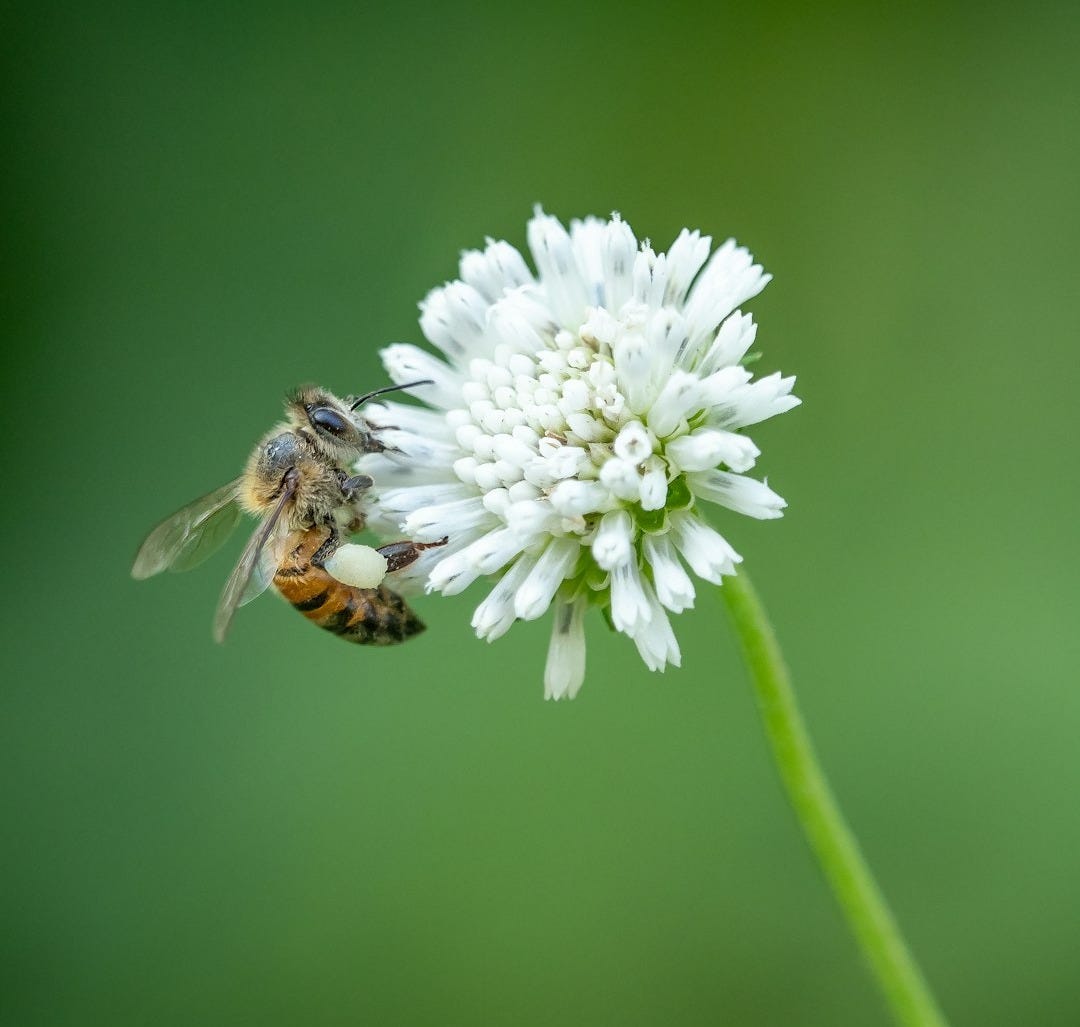
The flower spends some of its own resources creating a sweet reward and in return, certain animals visit, collect pollen and carry this male genetic magerial (pollen) between flowers. The plant is essentially ‘paying’ for a pollination service.
But like every investment, nectar production has a cost. And when resources become limited, plants have decisions to make.
A flower does not simply leak sugar because it is warm and sunny.
Nectar is produced by nectaries, a specialised glandular structures usually found at the base of flowers.
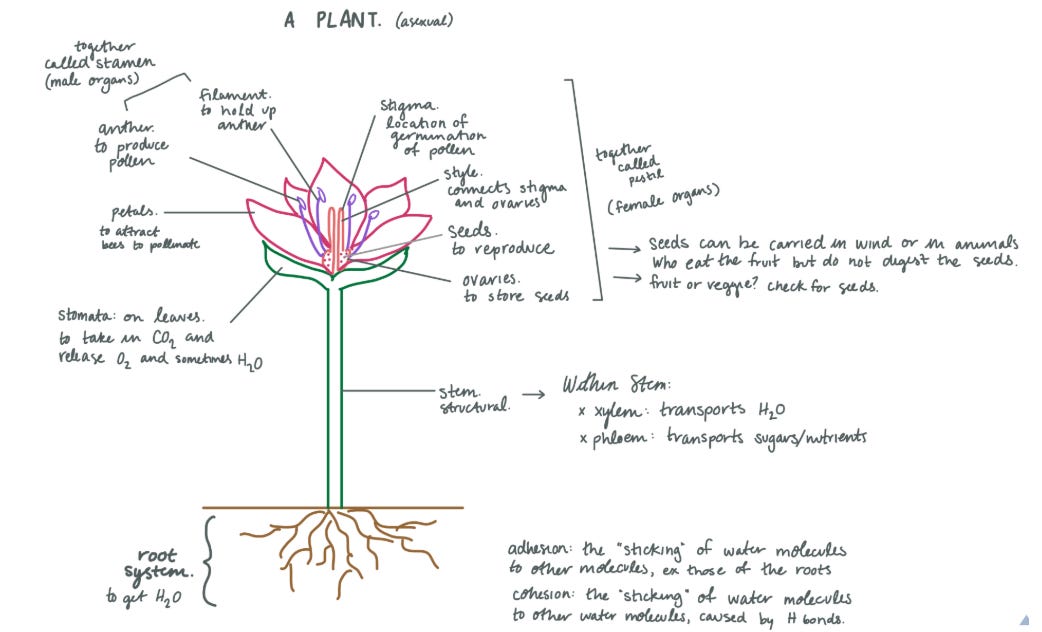
These tiny structures receive sugars transported through the plant’s phloem, alongside water supplied through the plant’s vascular system. The movement of water through plant tissues helps create the pressure needed for nectar secretion.
This is where turgor pressure comes in.
Turgor is essentially the internal pressure created when plant cells are full of water. A well-hydrated plant has firm, pressurised cells. When water becomes scarce, that pressure drops.
And when the pressure drops, nectar production can drop with it.
It is surprisingly mechanical.
The same way a garden hose struggles when the tap is barely open, a drought-stressed plant cannot maintain the same flow of resources into its flowers.
This is why I love looking closer.
A raspberry harvest can become a lesson in plant physiology.
A flower can become a lesson in climate change.
Subscribe to Bees & Beyond and join me for weekly explorations into bees, plants and the hidden systems connecting them.
The heatwave forces a triage decision
When soil moisture runs low and the air is hot and dry, a plant’s first priority is not being generous to pollinators.
It is staying alive.
The plant closes its stomata, the tiny pores on its leaves that control gas exchange and water loss through transpiration. This helps conserve water, but it also reduces the movement of water through the plant.
Less transpiration means less movement of water and dissolved resources through the plant’s tissues. Less water reaching the nectaries means less nectar being produced.
At the same time, plants begin reallocating their resources. Roots, leaves, repair and seed development become the priority.
Nectar, biologically speaking, is a luxury expense. It exists to encourage pollination. Under drought stress, that budget line can be reduced.
The flower may still be there. The colour may still be there. The scent may still be there. But the reward inside can change.
Concentrated but scarce
Here is the part that catches many people out.
During drought, nectar volume can decrease while the sugar concentration of the nectar that remains can increase. With less water available, the sugars become less diluted.
So the nectar that a bee does find may actually be more concentrated.
But richer does not mean more abundant.
A tiny drop of concentrated nectar cannot replace a plentiful supply. For a forager, this changes the energy equation. Flying costs fuel. Searching costs fuel. Returning repeatedly to flowers that offer less reward costs fuel.
A landscape can look full of flowers while becoming much harder work for pollinators.
If you care about how life really holds together on this planet, you will want to be here.
Not every plant responds the same way
This is where the plants on my land tell their own stories.
Fireweed is famous for being a heavyweight nectar producer under good conditions, but it is also a plant that benefits from reliable moisture. During drought, its nectar production can fall significantly.
Wild raspberry has a perennial root system that can continue accessing moisture below the drying surface, which may explain why this year’s fruit crop has been so impressive despite the lack of rain.
Bramble, meanwhile, is another interesting drought performer. Its deeper root system helps it access moisture when surface soils become dry, allowing it to continue flowering when other plants begin to struggle.
Meadowsweet belongs to a different world entirely. It loves damp ground: riverbanks, wetlands and fen edges. As the bog dries, meadowsweet is one of the plants that feels the pressure because it evolved for moisture-rich environments rather than scarcity.
Heather, particularly ling heather, is the moorland specialist of the group. It is adapted to poor, acidic soils and can tolerate conditions that would challenge many other plants. It holds its nerve for longer. But even a moorland specialist has limits when drought becomes prolonged.
Why this matters beyond one raspberry harvest
Europe has experienced a severe run of heat and drought conditions, with extreme temperatures affecting ecosystems across the continent.
This is not just about uncomfortable summer weather. It changes the relationship between plants and pollinators.
The landscape can still look green. The flowers can still be visible. But the invisible chemistry underneath may have changed.
That is the part we often miss. A flowering meadow is not automatically a well-fed meadow. A field of flowers is not automatically a field of nectar.
The real story is happening inside the plant.
The raspberries gave me the first clue. The flowers gave me the answer.
The question is not only whether flowers are present.
The question is whether they still have something to give.
I write about bees, but also about everything they connect to. Join Bees & Beyond for weekly articles.
Resources & further reading
Nectar biology and plant physiology
Nepi, M. et al. (2018). Nectar and pollination: ecological and physiological perspectives.
https://onlinelibrary.wiley.com/doi/10.1111/plb.12656
Drought effects on plant-pollinator interactions
Descamps, C. et al. (2021). Drought stress impacts plant-pollinator interactions.
https://www.sciencedirect.com/science/article/abs/pii/S0098847221001441?via%3Dihub
Climate change and honey bee food resources
Quaresma, A. et al. (2025). Honey bee food resources under threat from climate change.
https://www.nature.com/articles/s41467-025-68085-6
Bumblebee monitoring
Bumblebee Conservation Trust BeeWalk
https://www.bumblebeeconservation.org/beewalk/
So interesting! Thanks for sharing. Interestingly I also recently discovered that pollen can become sterile under extremely high temperatures. I discovered this after noticing that my tomato plants had an abundance of flowers but quite a lot of the fruit didn’t set, I then synchronistically read an article on Substack that explained about the sterile pollen. We had temperatures of 43 degrees here in Portugal around the time the flowers were blooming so it makes sense. It’s worrying though…
I’ve also noticed that although the blackberries here in Portugal are tasty, they are very different to the blackberries I’m used to back in Scotland and England. They are smaller and waaay less juicy. I presume because it is so much drier here, although perhaps a different variety too.
So could that explain why after our extreme drought last summer and fall we have so few pollinators this year? That many of them didn't make it through the winter?
We have large numbers of native plants in our yard that should have been buzzing and we had barely any this year.